Imagine a potential customer asking an AI assistant to recommend a reliable digital marketing agency instead of searching through dozens of websites. Will your business be part of that conversation? This is one of the biggest questions businesses should consider in 2026.
The way people discover information online is changing. Traditional search engines remain important, but AI-powered platforms and conversational search tools are introducing new ways for customers to find brands.
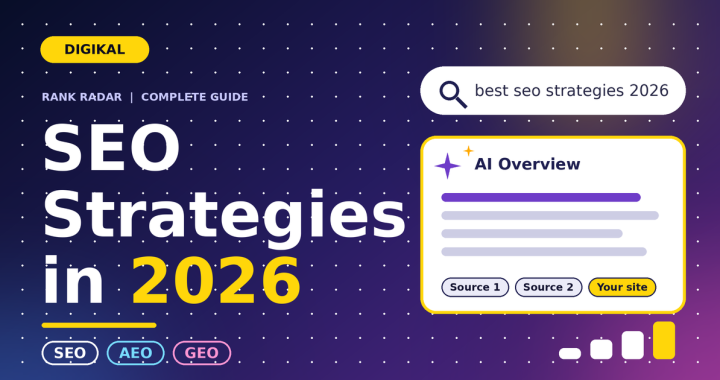
For businesses, this means simply publishing blogs and targeting keywords may not be enough. A stronger digital presence requires a combination of Search Engine Optimization (SEO), Answer Engine Optimization (AEO), and Generative Engine Optimization (GEO).
Let’s explore the strategies that can help businesses prepare for this changing search environment.
1. Build Your Website Around Real Customer Problems
A common mistake businesses make is creating website content based only on keywords with high search volumes. While keywords are useful, they do not always explain what a customer actually needs.
Consider a person searching for website development services. They may have questions about pricing, website features, maintenance, loading speed, or choosing the right developer.
A website that addresses these concerns provides more value than one that simply repeats the phrase “best website development company.”
Start by understanding your audience:
- What problems are potential customers experiencing?
- What questions do they ask before purchasing?
- What information helps them compare different services?
- What concerns prevent them from making a decision?
Use these insights to create articles, service pages, and guides that genuinely help people.
2. Make Your Content Ready for Answer-Based Search
People increasingly communicate with search platforms through natural questions. Instead of entering a few disconnected words, they might ask, “How can I promote my small business with a limited marketing budget?”
This behaviour makes Answer Engine Optimization (AEO) an important part of modern content planning.
AEO involves presenting information in a way that helps answer-focused systems identify relevant and useful responses.
How can businesses improve their AEO approach?
- Introduce important topics with straightforward explanations.
- Answer specific questions without unnecessary introductions.
- Create dedicated FAQ sections based on genuine customer concerns.
- Use descriptive headings that clearly communicate the subject.
- Explain technical terms using simple language.
- Support answers with relevant examples and reliable information.
For example, an article about local marketing could include a section titled “How can a local shop attract more customers through Google?”
This gives readers a direct answer while making the article easier for search systems to interpret.
3. Develop a GEO Strategy for AI-Powered Discovery
Generative Engine Optimization, or GEO, focuses on helping content become understandable, relevant, and potentially discoverable within AI-generated search experiences.
AI-powered platforms may draw information from multiple sources when preparing responses. Businesses therefore need to build a digital presence that communicates their expertise clearly.
Here are five practical ways to approach GEO:
Publish information that offers something new
Avoid producing another article that repeats the same advice available everywhere. Include original observations, practical experiences, comparisons, and useful explanations.
Make your brand information consistent
Your website, business profiles, service descriptions, and other online references should communicate accurate and consistent information about your company.
Explain subjects in context
Rather than mentioning isolated keywords, explain how different concepts relate to one another. For example, discuss how website speed, user experience, and technical SEO collectively affect website performance.
Show evidence of your knowledge
Publish genuine case studies, project examples, expert contributions, and detailed industry guides where available.
Keep information current
Review older articles and update outdated recommendations, broken links, statistics, and references.
GEO is not a guaranteed method of getting mentioned by AI platforms. Its purpose is to make your business information more useful, understandable, and credible across modern discovery channels.
4. Treat Website Performance as a Business Priority
A website is often the first interaction a customer has with a brand. If pages load slowly, buttons do not work, or information is difficult to find, visitors may leave before exploring your services.
In 2026, website optimisation should consider both technical performance and the actual visitor experience.
Focus on these areas:
- Check website loading performance on mobile devices.
- Compress large images without compromising their appearance.
- Use simple navigation so visitors can find important information.
- Fix broken pages and unnecessary redirects.
- Make contact forms easy to complete.
- Use secure HTTPS connections.
- Monitor Google’s Core Web Vitals.
A well-organised website helps visitors understand what you offer and how they can take the next step.
5. Create Content That Demonstrates First-Hand Knowledge
The internet already contains thousands of articles explaining basic marketing concepts. Publishing another generic explanation may not give readers a compelling reason to choose your website.
Instead, develop content around your actual expertise.
For instance, a digital marketing agency could publish:
- A breakdown of how it approaches a website SEO audit.
- A practical guide to planning a social media campaign.
- Common website mistakes noticed during client projects.
- A comparison of different advertising approaches.
- Lessons learned from a completed marketing project.
Original examples make your content more distinctive and useful.
You can use AI tools to brainstorm topics or organise research, but always review the final material for accuracy, originality, and practical value.
6. Strengthen Your Brand’s Online Reputation
Search visibility is not limited to the pages of your website. Customers may discover your business through reviews, industry websites, business directories, social media, and recommendations.
A trustworthy online identity can help potential customers feel more confident about contacting you.
Businesses should:
- Maintain accurate business profiles.
- Respond professionally to customer feedback.
- Publish genuine customer testimonials with permission.
- Keep service information updated.
- Participate in relevant industry discussions.
- Share useful insights through professional platforms.
For local businesses, an updated Google Business Profile is particularly valuable because it helps customers find essential information about nearby services.
7. Build a Connected Content Strategy
Publishing individual articles without connecting related topics can leave your website’s content scattered.
A better approach is to organise articles into subject-based groups.
For example, a digital marketing website could create a central SEO guide supported by separate articles about keyword research, technical optimisation, local search, AEO, and GEO.
Linking these related pages helps visitors explore subjects in greater depth and gives search engines additional context about your website.
For Digikal, this approach can be implemented through the Rank Radar and Search & Shine blog categories.
8. Measure What Actually Helps Your Business Grow
Website visits alone do not tell the complete story. A page receiving thousands of visitors may generate fewer enquiries than a smaller page attracting the right audience.
Businesses should connect SEO activities with meaningful outcomes.
Track these indicators:
| Performance indicator | What it tells you |
|---|---|
| Organic clicks | Visitors arriving through unpaid search results |
| Search impressions | How often pages appear in search results |
| Keyword performance | How your content performs for relevant queries |
| Engagement | How visitors interact with website content |
| Enquiries | How many potential customers contact your business |
| Conversions | How many visitors complete valuable actions |
Google Search Console and Google Analytics 4 can help you understand website performance and identify areas that need improvement.
For GEO, keep track of relevant AI-generated brand mentions and referral traffic where measurable.
9. SEO, AEO and GEO: Why Should Businesses Combine Them?
These approaches serve different purposes, but they can support one another.
SEO helps your website become more discoverable through traditional search engines.
AEO helps your information address specific questions through clear, answer-focused content.
GEO helps prepare your content and brand information for discovery in generative AI experiences.
For example, a business publishing an article about website design can use SEO to target relevant search queries, AEO to answer common customer questions, and GEO to provide detailed, trustworthy explanations that AI systems can understand.
This creates a more complete approach to digital visibility.
Frequently Asked Questions
1. What is the biggest SEO priority for businesses in 2026?
The priority should be creating useful, technically accessible website content that addresses customer needs while building credibility and search visibility.
2. Does GEO replace traditional SEO?
No. GEO complements traditional SEO. Search engines and AI-powered discovery platforms have different experiences, so businesses should prepare their websites for both.
3. How can a website become more suitable for AEO?
Use question-based headings, concise explanations, relevant FAQs, structured information, and accurate answers to common customer questions.
4. Is AI-generated content bad for SEO?
Not necessarily. AI-assisted content can be useful when it provides accurate, original, and helpful information. Low-quality or misleading content is the bigger concern.
5. Can small businesses compete in AI-powered search?
Yes. Small businesses can develop useful specialised content, demonstrate local expertise, maintain accurate business information, and build a credible online presence.
6. How frequently should businesses update their SEO content?
Review articles periodically and whenever important information changes. Update content when you have meaningful improvements to offer rather than changing dates without making real updates.
Conclusion: Make Your Business Easier to Discover
The future of online visibility is not just about appearing on the first page of a search engine. It is about helping customers discover the right information, understand your expertise, and feel confident about choosing your business.
In 2026, businesses should move beyond keyword-focused publishing and develop a more complete approach that combines SEO, AEO, and GEO.
At Digikal, we believe that a strong digital presence begins with meaningful strategies and content that serves a real purpose. Whether you want to improve your website visibility, attract relevant visitors, or build a recognisable brand, the right digital approach can help you move forward.
Digikal – Shaping the Digital Kal.