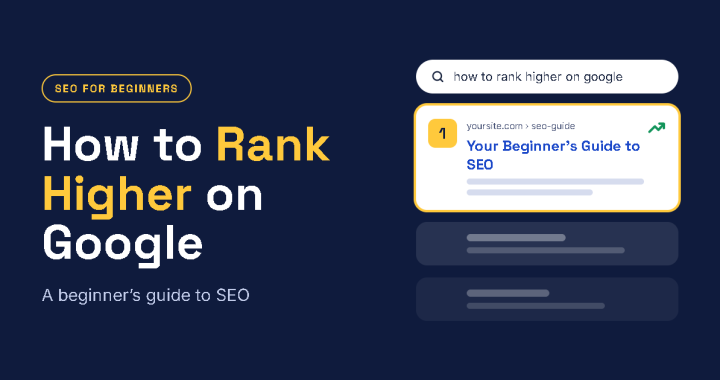
How to Rank Higher on Google: A Beginner’s Guide to SEO

Introduction
Imagine opening a beautiful shop in a busy market, but placing it in a lane where hardly anyone walks. Your products may be excellent, your prices reasonable, and your service outstanding, but customers will struggle to discover you. A website faces a similar challenge when it does not appear in search results.
Google acts like a discovery platform where people look for answers, compare businesses, and decide what to purchase. If your website does not appear when potential customers search for something related to your business, you could be missing valuable opportunities.
Search Engine Optimisation (SEO) helps solve this problem by improving how your website appears in organic search results. But the way people discover information is changing. Along with traditional SEO, businesses now need to understand Answer Engine Optimisation (AEO) and Generative Engine Optimisation (GEO).
Let’s explore how beginners can build a search strategy that works across traditional search engines and modern AI-powered platforms.

1. Start by Understanding What Your Customers Search For

Many website owners begin SEO by adding popular keywords to their pages. However, a better starting point is understanding the problems their customers are trying to solve.

Think about a person who owns a clothing store. They might search for:

– How to promote a clothing business online?
– Which social media platform is best for selling clothes?
– How can I attract local customers?
– Is a business website necessary for a small shop?

These searches reveal what the audience needs, not just which words they use.

Create a list of questions your customers frequently ask. Then organise them according to your services and website pages.

Tools such as Google Trends, Google Keyword Planner, and Google Search Console can help you understand search behaviour and identify relevant opportunities.

Remember: A useful keyword is one that connects your website with the right audience, not simply one with a large search volume.Read More…→

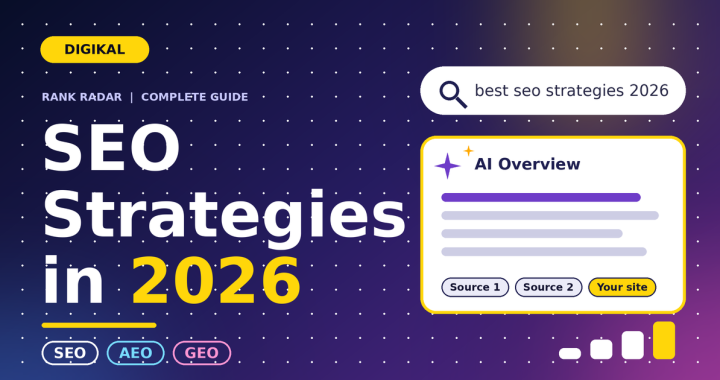
SEO Strategies in 2026: What Every Business Needs to Know

Imagine a potential customer asking an AI assistant to recommend a reliable digital marketing agency instead of searching through dozens of websites. Will your business be part of that conversation? This is one of the biggest questions businesses should consider in 2026.

The way people discover information online is changing. Traditional search engines remain important, but AI-powered platforms and conversational search tools are introducing new ways for customers to find brands.

For businesses, this means simply publishing blogs and targeting keywords may not be enough. A stronger digital presence requires a combination of Search Engine Optimization (SEO), Answer Engine Optimization (AEO), and Generative Engine Optimization (GEO).

Let’s explore the strategies that can help businesses prepare for this changing search environment.

1. Build Your Website Around Real Customer Problems

A common mistake businesses make is creating website content based only on keywords with high search volumes. While keywords are useful, they do not always explain what a customer actually needs.

Consider a person searching for website development services. They may have questions about pricing, website features, maintenance, loading speed, or choosing the right developer.

A website that addresses these concerns provides more value than one that simply repeats the phrase “best website development company.”

Start by understanding your audience:

  • What problems are potential customers experiencing?
  • What questions do they ask before purchasing?
  • What information helps them compare different services?
  • What concerns prevent them from making a decision?

Use these insights to create articles, service pages, and guides that genuinely help people.

2. Make Your Content Ready for Answer-Based Search

People increasingly communicate with search platforms through natural questions. Instead of entering a few disconnected words, they might ask, “How can I promote my small business with a limited marketing budget?”

This behaviour makes Answer Engine Optimization (AEO) an important part of modern content planning.

AEO involves presenting information in a way that helps answer-focused systems identify relevant and useful responses.

How can businesses improve their AEO approach?

  • Introduce important topics with straightforward explanations.
  • Answer specific questions without unnecessary introductions.
  • Create dedicated FAQ sections based on genuine customer concerns.
  • Use descriptive headings that clearly communicate the subject.
  • Explain technical terms using simple language.
  • Support answers with relevant examples and reliable information.

For example, an article about local marketing could include a section titled “How can a local shop attract more customers through Google?”

This gives readers a direct answer while making the article easier for search systems to interpret.Read More…→